• DEVI CROPSCIENCE

Onion

Home > Allium cepa

Onion

3 applications of Boom Flower® @ 2 ml/liter of water increased the marketable yield of Onion by 12.32%

Salient Findings

  • Boom Flower® increased the height of the plant by 11.36%
  • Increased the bulb size by 17.62%
  • Increased the marketable onion yield by 12.32%
  • Increased the TSS content by 5.66%
  • Increased the quality of the Onion appreciably
  • Decreased the storage loss at the end of 2 months

Source: National Horticulture Research and Development Foundation, Nasik, Maharashtra, India.
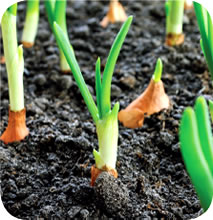
Suggested Spray Schedule for Onion

The application will vary depending on the duration of the crop

Crop Duration BF Dose Application Schedule Remarks
Direct sown 100 days 2 ml / lit of water 1st spray 30 DAS Improves root growth
2nd spray 45 DAS Improves bulb formation
3rd spray 60 DAS Increases bulb size and yield
>> To view more details scroll the table from left to right

Boost Onion Growth and Yield with Devi Cropscience Onion Fertilizer

Onion is a nutrient-demanding crop that requires balanced nutrition throughout its growing cycle. Healthy bulb development, strong roots, uniform sizing, and better crop quality all depend on timely nutrient management. Choosing the right onion fertilizer and following a consistent fertilisation schedule can help support healthy plant growth and improved productivity.

At Devi Cropscience, we provide advanced crop nutrition solutions designed to support healthy crop development across different growth stages. Our range of fertilizer solutions helps farmers maintain balanced nutrient availability for onion cultivation while promoting sustainable farming practices.

Choosing the Right Onion Fertilizer for Higher Productivity

Choosing the best fertilizer for onions and garlic starts with understanding your crop’s nutrient requirements, soil condition, and stage of growth. Rather than relying on a single fertilizer throughout the season, a balanced nutrient management approach helps support healthy plant development and better bulb quality.

Consider Your Soil Condition

Before selecting a onion fertiliser, assess your soil’s nutrient levels through soil testing. This helps identify nutrient deficiencies and allows you to apply fertilizers more efficiently. Applying nutrients based on actual soil requirements supports better nutrient use efficiency and reduces unnecessary fertilizer applications.

Match Fertilizer to the Crop Growth Stage

Onion plants have different nutrient requirements during each stage of growth. Early growth benefits from balanced nutrition that supports root establishment and vegetative development, while later stages require continued nutrient management to encourage healthy bulb formation and crop quality. Choosing fertilizers according to the crop stage helps maintain balanced plant growth throughout the season.

Look for Balanced Crop Nutrition

A good onion fertilizer should provide balanced nutrition rather than focusing on a single nutrient. Proper nutrient management supports healthy roots, vigorous vegetative growth, efficient nutrient uptake, and uniform bulb development. Consistent nutrient availability throughout the crop cycle contributes to better crop performance.

Choose Quality Agricultural Solutions

Reliable crop nutrition products play an important role in maintaining healthy onion growth. We offer vegetable fertilizer solutions that support balanced crop nutrition for vegetable cultivation. Farmers can also complement their crop management programme with plant growth regulator solutions to support healthy plant development and improved nutrient utilisation where appropriate.

Consider Complete Crop Management

Balanced fertilisation delivers the best results when combined with proper irrigation, crop protection, and regular field monitoring. We also provide bio-pesticides to support integrated crop management, boom flower as a plant growth regulator for improved crop performance, and irrigation system installation solutions that help maintain efficient water management throughout the growing season.

Monitor Crop Performance Regularly

Regular field observations help farmers evaluate plant health and adjust nutrient management according to crop requirements. Monitoring growth, soil moisture, and overall crop condition supports informed fertilisation decisions and contributes to healthy onion production.

Onion Fertilizer Schedule: When and How Often to Fertilize

Following a planned onion fertilizer schedule helps maintain balanced nutrient availability throughout every stage of crop growth. The exact fertilisation programme may vary depending on soil fertility, irrigation practices, weather conditions, and local agronomic recommendations.

Onion Growth Stage Recommended Focus Fertilizer Objective General Timing
Before planting Prepare nutrient-rich soil Support early root establishment and uniform crop emergence Before sowing or transplanting
Early vegetative growth Balanced nutrient supply Encourage healthy leaf and root development During early crop establishment
Active vegetative growth Maintain balanced nutrition Support vigorous vegetative growth and efficient nutrient uptake As the crop continues to grow
Bulb initiation Balanced nutrient management Encourage healthy bulb formation and uniform bulb development At the beginning of bulb formation
Bulb enlargement Continued nutrient management Support bulb size, quality, and overall crop performance During active bulb development
Before harvest Reduce fertilizer application Allow bulbs to mature naturally and prepare for storage As the crop approaches maturity

Regular soil testing and field monitoring help farmers determine crop nutrient requirements more accurately. Adjusting fertilizer applications according to soil conditions and crop performance supports efficient nutrient management throughout the growing season.

Shop Devi Cropscience Onion Fertilizer Today

Balanced nutrition is one of the key factors in successful onion cultivation. Applying the right nutrients at the appropriate growth stages supports healthy roots, vigorous vegetative growth, and uniform bulb development. Devi Cropscience offers reliable crop nutrition solutions that help farmers manage onion cultivation more effectively while supporting sustainable agricultural practices.

Along with onion fertilizer solutions,we provides a comprehensive range of agricultural products, including, bio pesticides,  irrigation system installation, and cereal fertilizer solutions to support different crop management requirements.

Explore our product range and choose trusted agricultural solutions that help support healthy crop growth, efficient nutrient management, and productive farming.

FAQs

1. What are the essential nutrients onions need from fertilizer?

Onions require a balanced supply of nitrogen, phosphorus, and potassium throughout their growth cycle. These nutrients support healthy root development, vegetative growth, bulb formation, and overall crop quality while helping maintain balanced plant nutrition.

2. How often should I apply the best fertilizer for onion plants? 

The frequency of the best fertilizer for onion crop application depends on soil fertility, crop growth stage, irrigation practices, and local agronomic recommendations. Regular crop monitoring and soil testing help determine when additional nutrients are required.

3. What is the ideal NPK ratio for an onion fertilizer schedule?

There is no universal NPK ratio suitable for every onion crop. The ideal nutrient balance depends on soil nutrient levels, crop stage, and regional growing conditions, making soil analysis an important part of fertiliser planning.

4. When should I stop fertilizing onion plants?

Fertilizer application should gradually reduce as the onion crop approaches maturity. The exact timing depends on crop stage, soil condition, and local agronomic recommendations to support proper bulb development and storage quality.

5. What is the ideal onion fertilizer schedule for healthy growth?

A balanced onion fertilizer schedule generally begins with nutrient application before planting, followed by planned nutrient management during vegetative growth and bulb development. The schedule should always be adjusted according to soil conditions, irrigation practices, and regular crop observations.